
The Best Fluffy Pancakes recipe you will fall in love with. Full of tips and tricks to help you make the best pancakes.


Paris Haute Couture: The Artistry Behind Fashion’s Most Luxurious Masterpieces
In the world of fashion, Paris Haute Couture reigns supreme like a glittering crown atop a stylish head. It’s where dreams are stitched into reality and creativity knows no bounds. Imagine a place where fabric flows like fine wine and every seam tells a story of artistry and passion. This is not just fashion; it’s an extravagant spectacle that leaves mere mortals in awe.
Paris Haute Couture
Paris Haute Couture represents the highest level of fashion craftsmanship. Defined by the Chambre Syndicale de la Haute Couture, this elite segment requires designers to adhere to strict guidelines. Attributes of haute couture include handmade garments that demonstrate exceptional skill and exquisite attention to detail.
Designers create custom pieces for individual clients, ensuring a perfect fit and personalized experience. The use of luxurious materials, intricate embroidery, and innovative techniques elevates these creations beyond typical fashion. Prestigious fashion houses like Chanel, Dior, and Givenchy lead in this prestigious arena, showcasing collections during Paris Fashion Week.
The term “haute couture” translates to “high sewing” in French, emphasizing the art of tailoring. Fashion shows present these creations as theatrical spectacles, revealing the designers’ visions and inspiring awe. Attendees include celebrities, influential figures, and industry experts, all drawn to the exclusivity and extravagance.
Each piece embodies the designer’s creativity, merging art with wearable fashion. The collections often push boundaries, exploring themes ranging from historical references to futuristic concepts. Every garment tells a story, making haute couture an ongoing dialogue between the designer and the audience.
Receiving the haute couture label signifies recognition of exceptional craftsmanship and creativity. The fashion world acknowledges these garments as unique masterpieces, celebrated for their artistry. This dedication to innovation and quality continues to solidify Paris’ status as the fashion capital, inspiring future generations of designers.
The History of Paris Haute Couture
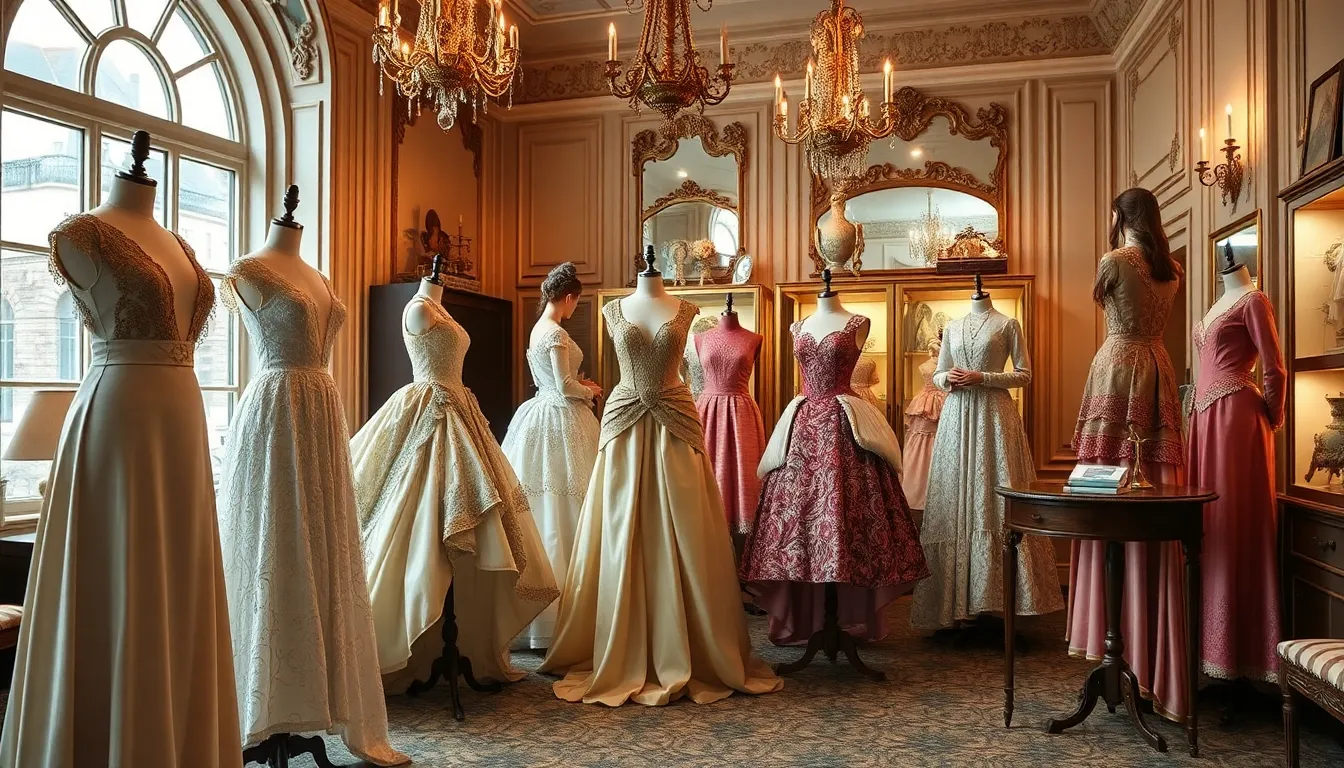
Paris Haute Couture boasts a rich history that traces back to the mid-19th century. This elite fashion segment embodies craftsmanship and artistic expression, reflecting societal trends and cultural shifts.
The Origins
The origins of Paris Haute Couture date back to 1858 when Charles Frederick Worth opened the first haute couture house. Designers often exhibited their creations in exclusive salons, showcasing their artistry to affluent clients. The term “haute couture” emerged as a mark of quality, with regulations being established by the Chambre Syndicale de la Haute Couture in 1945. This organization aimed to protect the integrity of couture standards. Craftsmanship and luxury became inseparable as artisans devoted time to create unique pieces that exemplified exquisite tailoring and design.
Key Designers Through the Years
Throughout the years, several designers shaped the landscape of Paris Haute Couture. Coco Chanel revolutionized women’s fashion in the 1920s by introducing the iconic little black dress. Christian Dior’s “New Look,” launched in 1947, redefined femininity with its hourglass silhouette. Balenciaga, known for its architectural designs, challenged traditional forms and pushed creative boundaries. Yves Saint Laurent made history in 1966 with his ready-to-wear line, bridging high fashion and everyday wear. Each designer contributed to the evolution of haute couture, ensuring its relevance and prestige in the ever-changing world of fashion.
The Craftsmanship Behind Haute Couture
Haute couture represents an extraordinary dedication to artistry and detail. It reflects a meticulous approach that separates it from ready-to-wear fashion.
Fabric Selection
Choosing fabrics for haute couture involves careful consideration of texture, weight, and drape. Designers often select luxurious materials like silk, lace, and taffeta, emphasizing quality and exclusivity. Unique combinations of fabrics can give each piece its distinctive character. Furthermore, sourcing rare textiles enhances the garment’s luxury appeal. Fabrics used in haute couture must complement the designer’s vision, ensuring a flawless representation of creativity. Notably, some designers even create custom fabrics specifically for their collections, incorporating innovative patterns or intricate embroidery.
Tailoring Techniques
Tailoring techniques in haute couture signify the highest level of craftsmanship. Each garment undergoes an extensive fitting process, allowing designers to achieve perfect silhouettes. Using methods like draping, hand-stitched seams, and boning ensures garments fit the body beautifully. Time-intensive techniques result in one-of-a-kind pieces that showcase exceptional skill. Patterns may be hand-drawn, allowing for a tailored approach that meets individual client needs. Furthermore, a focus on handmade details enhances the garment’s overall elegance, making each piece a true work of art.
Iconic Haute Couture Shows
The iconic haute couture shows captivate audiences with their opulence and artistry. Paris Fashion Week serves as the backdrop for these extraordinary displays. Designers such as Chanel and Dior showcase intricate collections that embody their artistic visions. Each show features meticulously crafted garments, reflecting both tradition and innovation.
Notable shows often evoke rich historical narratives or futuristic concepts. For instance, Christian Dior’s 1947 “New Look” revolutionized women’s fashion with its hourglass silhouettes. These dramatic presentations mesmerize attendees, creating an atmosphere filled with excitement and anticipation.
Models grace the runway wearing creations that blend high-fashion craftsmanship with theatrical flair. Footwear and accessories complement the ensembles, adding depth to the overall presentation. The exclusivity of these events enhances allure, drawing celebrities, fashion critics, and industry insiders alike.
Themes explored during these shows range from cultural references to personal expression. Every piece serves as a statement, merging artistry with wearable elegance. The intricate details of each garment, such as hand-stitched embellishments and unique fabrics, amplify the uniqueness of the collections.
Haute couture shows not only highlight individual designer’s skills but also contribute to the ongoing dialogue within the fashion industry. They influence trends and inspire emerging designers through innovative techniques and artistic expressions. These events symbolize the pinnacle of fashion, reinforcing Paris’ status as the epicenter of haute couture excellence.
The Future of Paris Haute Couture
Paris Haute Couture faces exciting transformations as it adapts to contemporary demands and technologies. Increasingly, sustainability becomes paramount, with designers opting for eco-friendly fabrics and ethical production practices. This shift addresses growing consumer awareness regarding fashion’s environmental impact.
Emerging designers enter the scene, bringing fresh perspectives and innovative techniques. These creators challenge traditional norms and push boundaries in design. Traditional houses may incorporate avant-garde elements to appeal to new audiences while retaining their core identity.
Technology plays a significant role in shaping the future of haute couture. Digital tools streamline design processes, allowing for more intricate creations. Virtual reality experiences also enable clients to engage with collections from anywhere, broadening accessibility.
Collaboration emerges as a crucial trend as art and fashion intersect. Designers partner with artists and influencers to create unique pieces that resonate with diverse audiences. This fusion of creativity enhances the cultural relevance of haute couture, reflecting broader societal changes.
Inclusivity continues to gain importance, as brands expand their size ranges and cater to diverse body types. Haute couture can no longer remain exclusive to a select few; it must embrace a wider demographic. Adapting to these changes ensures relevance in an evolving marketplace.
Global events influence the direction of Paris Haute Couture. Cultural movements and shifting consumer preferences shape aesthetic choices and themes presented during runway shows. As fashion reflects its time, haute couture’s future rests on its ability to balance art and commerce effectively.
Conclusion
Paris Haute Couture stands as a testament to the enduring allure of fashion as an art form. Its blend of creativity and craftsmanship continues to inspire designers and fashion enthusiasts alike. As the industry evolves, the commitment to quality and innovation remains unwavering.
The future promises exciting developments as sustainability and inclusivity shape new narratives within haute couture. This dynamic landscape ensures that Paris will maintain its status as the fashion capital, captivating audiences with every exquisite collection. Haute couture not only celebrates individual artistry but also reflects broader cultural shifts, ensuring its relevance for generations to come.